
NEW PARADIGM
Recap: Lost in the struggles of the plains?
Lots of debt, little impact? What can be expected from the historic investment package half a year after its adoption – and how can its success be measured?
BY
FORUM NEW ECONOMYPUBLISHED
11. DECEMBER 2025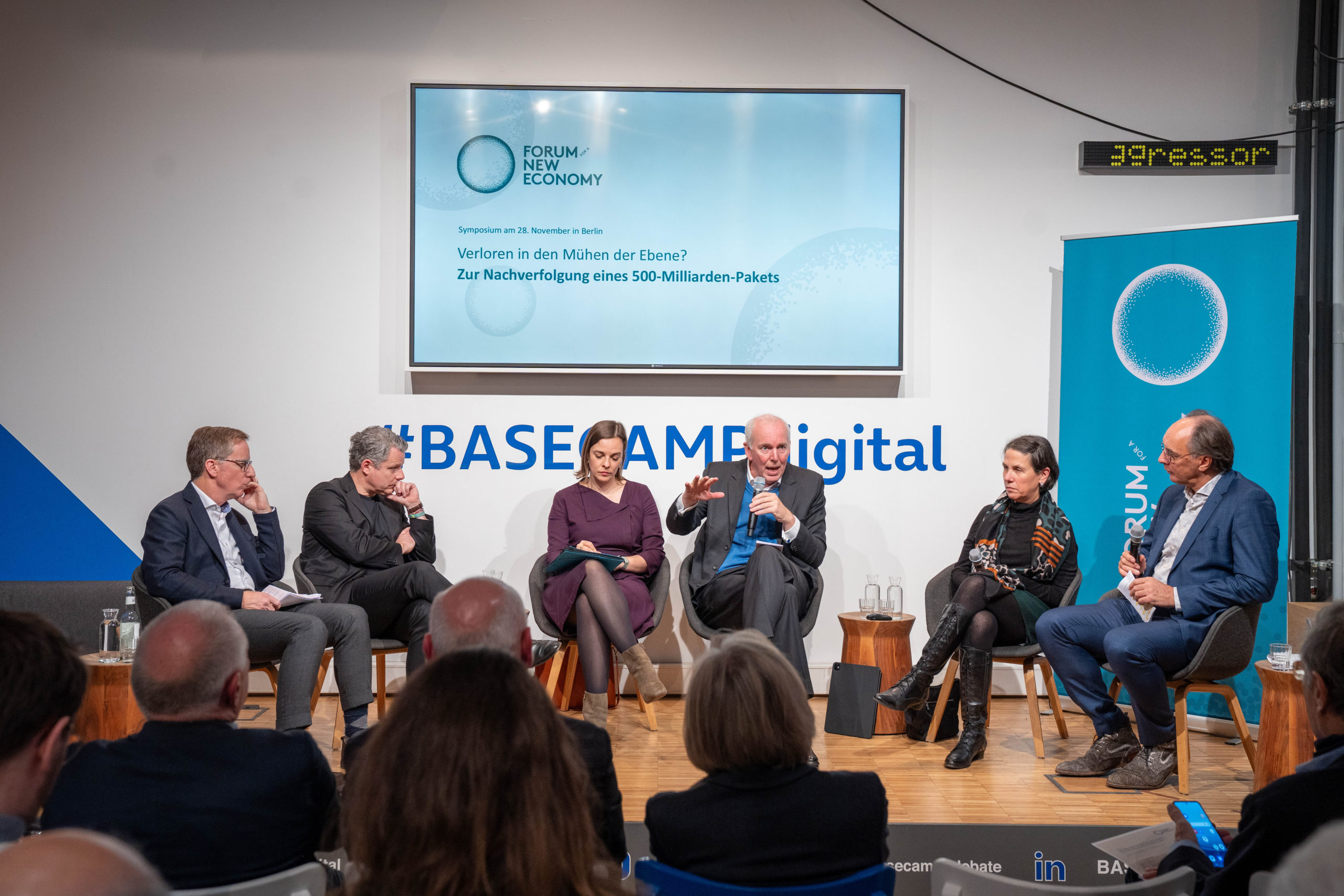
At the heart of the panel was one central question: how do you track and communicate the impact of a €500-billion investment package in a way that people can actually understand? Moderator Thomas Fricke set the tone early on, arguing that monitoring such a massive programme is not a technical afterthought but a core task. It requires an overview of what is happening on the ground—and a narrative that makes visible why these investments matter. With dozens of funding channels and layers of responsibility involved, that’s far from trivial.
Jakob von Weizsäcker stressed the long-term nature of the whole endeavour. Investment effects don’t show up after a few months, he reminded the audience; they unfold over many years. Effective monitoring therefore needs to map these long pathways—following the money from planning to implementation to economic impact. What ultimately counts is not the impressive headline number, but how much of it translates into real projects and real change.
Michael Hüther framed monitoring as a tool for honest feedback: where are things working, and where do they stall? The concept behind the package may be sound, he said, but its legitimacy hinges on visible results. Transparency about what actually reaches local communities helps build trust—something that is still largely missing. Clear markers of progress, perhaps even simple visual cues or a “national investment clock,” could help make the state’s actions more tangible.
Katja Rietzler brought a sobering economic perspective. In real terms, she argued, the €500 billion are worth considerably less than they appear, because the funds are spent over more than a decade while investment prices have risen sharply. Under realistic assumptions, the package shrinks substantially in purchasing power. She also pointed out that parts of the budgeted increases—such as funds for Länder and municipalities—are unlikely to translate into genuine additional investment. A robust monitoring system therefore needs to account for real purchasing power, identify where money is diverted, and highlight when political choices—like tax cuts—undermine the intended investment effect.
Laura Krause offered a look inside the Finance Ministry’s monitoring work. Her team starts from the citizen’s perspective: most people cannot picture what “€500 billion” actually means, let alone the intricacies of public budgeting. Monitoring must therefore do more than measure spending; it must answer two simple questions: is the special fund working, and where does it get stuck? Krause described how the ministry collects feedback from practitioners to identify bottlenecks, and why breaking the big number down into concrete, relatable outputs is essential for public understanding.
For Mirko Derpmann, monitoring is above all a tool to build confidence. Announcing €500 billion is already a political message, he said, but it will only resonate if the public can see that the money is not disappearing into administrative grey zones. Clear success stories, visible flagship projects and consistent communication are key—otherwise the impact of the programme risks getting lost in a sea of small, technical measures.
Taken together, the speakers drew a coherent picture of what monitoring needs to deliver today: realism about time lags and shrinking purchasing power; transparency about implementation hurdles; a narrative that makes progress visible; and trust in the state’s ability to deliver. In that sense, monitoring is not an administrative add-on but the backbone of the €500-billion package—essential for ensuring that it generates real impact, and equally essential for making that impact felt and understood.