
NEW PARADIGM
Forum newsletter: When Reforms Don’t Fix the Crisis
From our Forum New Economy newsletter series
BY
THOMAS FRICKEPUBLISHED
5. DECEMBER 2025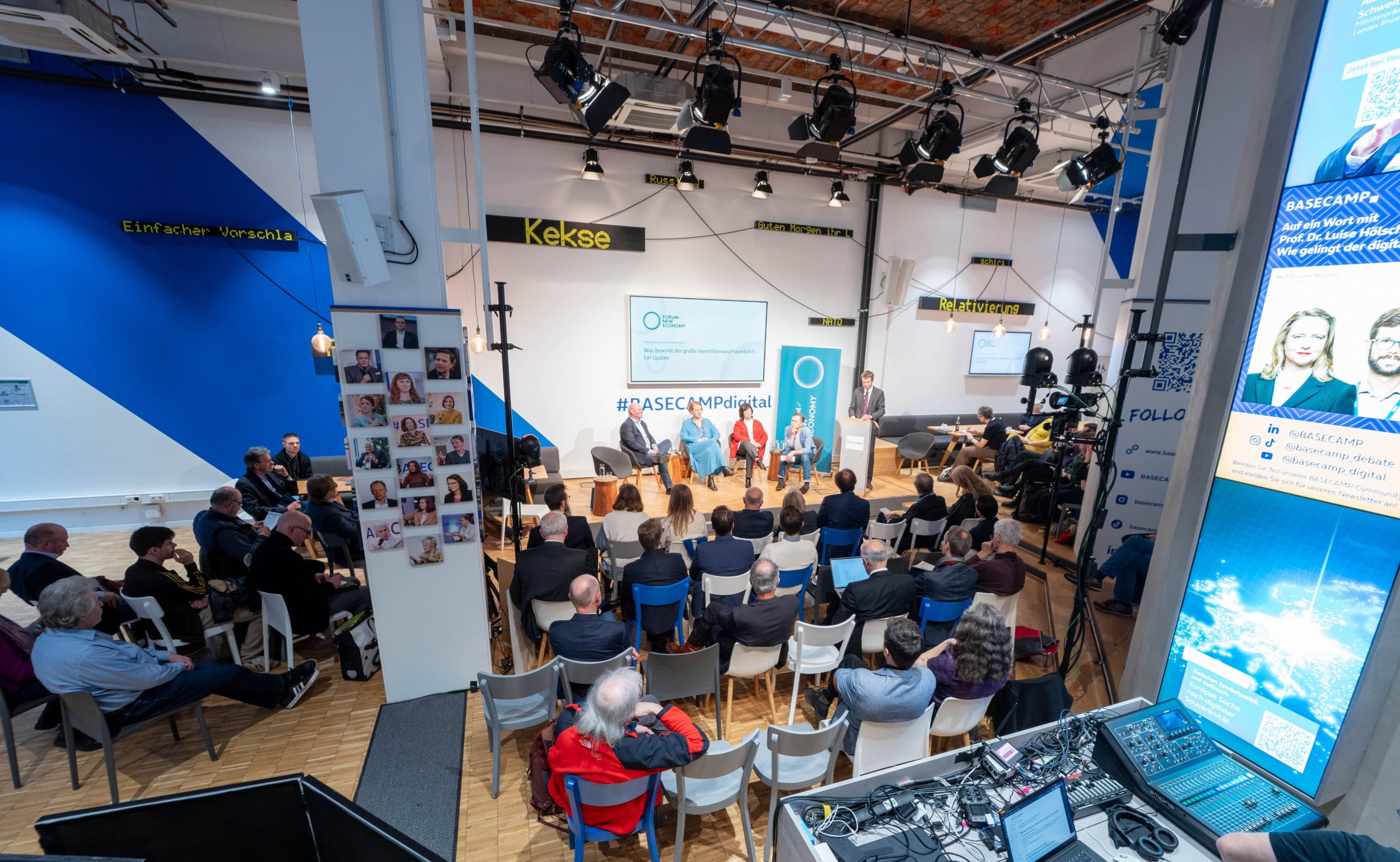
Dear friends and colleagues,
For months now, new speculations about an imminent economic collapse have been circulating across Germany. For months, such diagnoses have been followed by claims that urgent reforms are therefore needed. And for months, every second talk show and commentary has focused on either bureaucracy, the new basic income, or – of course – pensions.
Now – despite all shortcomings – there are at least some laws and initiatives for all three, and since today also for pensions. The only question is whether the economy will actually improve anytime soon. The answer: rather unlikely.
Not that there was nothing to reform in bureaucracy, basic income, or pensions. But reforms in these areas are unlikely to change much about the deeper causes of the German economy’s three-year stagnation. The new citizen’s benefit will hardly prevent the looming collapse of the old global trade order, nor will it stop Donald Trump from threatening German industry with tariffs. Even a thousand measures to cut administrative rules won’t help the German car industry catch up in electric mobility. What has been weighing on the economy for years are also cheap Chinese competitors—or consumers’ fear of wars, AI, and other uncertainties. None of this is helped by pension reform. And it is not even pressing – an issue for tomorrow.
What would help is an improved industrial policy, faster expansion of charging infrastructure, or stronger domestic demand. The doom scenarios that have been celebrated in Germany for months are more likely to prolong the recession. Who wants to invest in a country whose business leaders constantly proclaim its downfall? Who spends money on major purchases when the public discourse is dominated day after day by supposedly “painful” cuts and slower pension increases? And when the state has, through higher taxes and budget cuts, been withdrawing money for years?
So where does Germany really stand at the turn of 2026? How close is the actual collapse? How much of the dire warnings is strategic-pushed by those who see political opportunity only through increased pressure? What would genuinely help? And why is economic debate in Germany once again taking place as if it were 20 years ago – ignoring the many insights gained since?
These are the questions we will explore in our next New Economy Short Cut² in cooperation with the OECD Berlin Centre – featuring Danish economist Erik F. Nielsen, who recently accused Germans of excessive pessimism, IMK director Sebastian Dullien, and OECD economist Nicola Brandt: this coming Friday, 12 December, from 1 p.m.
*
If Germany sees stronger economic growth next year, it will likely be for other reasons: namely, the large investment package launched in spring, which is set to provide €500 billion in public investment over twelve years. This was the focus of our autumn symposium last week – featuring, among others, Deputy Finance Minister Steffen Meyer.
The takeaway: While the federal government has so far spent far from all allocated funds on investments, as Green MP Lisa Paus criticized – and as Achim Truger of the Council of Economic Experts confirmed – the package still holds significant potential. According to Truger, every euro invested could generate up to €1.50 in additional economic output. Very concretely: in the old coal town of Spremberg, the funds arriving there will allow long-delayed projects to finally be completed, according to mayor Christine Herntier.
Equally important in the future will be how well the use of these €500 billion is tracked – and how policymakers ensure that people actually notice and benefit from it. The Ministry of Finance is already working on a dedicated logo for the program.
You can find the Re-Live of both symposium sessions – on impact and on monitoring – here.
Have a great weekend,
Thomas Fricke
This text is from our bi-weekly newsletter series. To subscribe, click here.